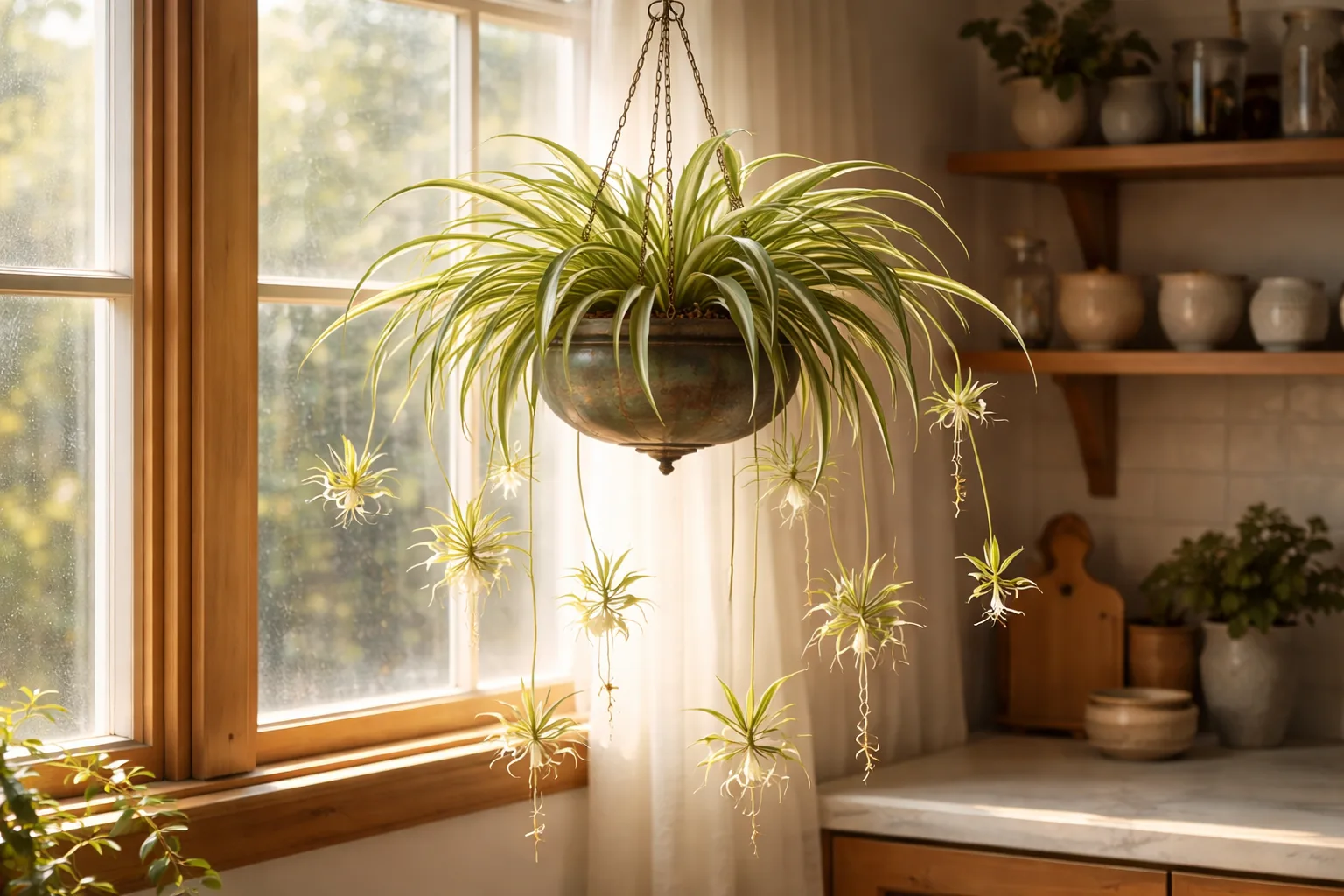
Spider PlantCare Guide
Chlorophytum comosum
Also known as: Airplane Plant, Ribbon Plant, Spider Ivy
Quick Care Reference
Water
Every 7-10 days
Let soil dry between waterings
Light
Bright indirect
Tolerates some direct morning sun
Humidity
Average (40-60%)
Adapts to normal home humidity
Temperature
55-80°F
Tolerates temperature fluctuations
Soil
Well-draining
Standard potting mix with added perlite
Spider plants are the classic beginner houseplant, beloved for their arching, variegated leaves and prolific baby plants (spiderettes). They're virtually indestructible, tolerant of neglect, and one of the few common houseplants safe for pets. Mature plants send out long stems with small white flowers, followed by baby plantlets that dangle like spiders on a web — hence the name. They're also excellent air purifiers, removing formaldehyde and xylene from indoor air.
Watering Guide
Spider plants are forgiving and can handle some drought. Water when the top inch of soil is dry. They have thick, tuberous roots that store water, so they'd rather be a bit dry than soggy. Watch for crispy leaf tips as a sign of underwatering or water quality issues.
Seasonal Adjustments
Spring
Resume regular watering. Every 7-10 days as growth accelerates.
Summer
Active growth. Water when top inch is dry, typically weekly.
Fall
Reduce watering as growth slows. Every 10-14 days.
Winter
Minimal water needed. Every 2-3 weeks. Be careful not to overwater.
Signs of Overwatering
- Yellow leaves
- Root rot (mushy, brown roots)
- Musty soil smell
- Soft, limp leaves
Signs of Underwatering
- Brown, crispy leaf tips
- Pale or faded leaf color
- Leaves curling
- Slow or no new growth
Light Requirements
Spider plants prefer bright, indirect light but are adaptable. They tolerate low light conditions, though growth slows and variegation may fade. They can handle some direct morning sun but avoid harsh afternoon rays.
Ideal Conditions
Bright, indirect light. East-facing windows are perfect. Morning sun is fine.
Low Light Tolerance
Good. Will survive in low light but may lose variegation and grow slowly.
Common Problems
Spot something wrong? Find your symptoms below to diagnose and fix the issue.
Pet & Child Safe
Non-toxic to cats, dogs, and humans. One of the safest houseplants for homes with pets. Note that cats may be attracted to chewing on spider plants, which can cause mild stomach upset but is not dangerous.
Spider Plant Care FAQ
Why are my spider plant's tips turning brown?
Spider plants are very sensitive to fluoride in tap water. This is the most common cause of brown tips. Switch to distilled, filtered, or rainwater. Low humidity and inconsistent watering also contribute. The brown tips won't turn green, but you can trim them off.
How do I get my spider plant to produce babies?
Ensure it has bright, indirect light — this is key. The plant also needs to be mature (usually 1+ years old). Being slightly root-bound encourages baby production. Avoid high-nitrogen fertilizers, which promote leaves over flowers and babies.
Are spider plants safe for cats?
Yes! Spider plants are non-toxic to cats and dogs, making them one of the safest houseplants for pet owners. However, cats often love to chew on them (they have mild hallucinogenic properties for cats), so you may want to hang them out of reach.
Can I plant spider babies directly in soil?
Yes, you can plant them directly in moist soil while still attached to the mother plant, then snip the connection once rooted. Or cut them off and root in water first. Both methods work well.
How often should I water my spider plant?
Every 7-10 days during growing season, allowing soil to dry between waterings. In winter, water less — every 2-3 weeks. Spider plants store water in their roots and handle some drought, but consistent watering promotes best growth.
Should I cut the babies off my spider plant?
It's not necessary, but you can. Leaving them doesn't harm the mother plant. Removing them allows the plant to direct more energy to its own growth. If you want more plants, propagate the babies. If you prefer a tidier look, trim them off.
Track your Spider Plant
Smart reminders, health tracking, and household coordination — all free.
No credit card required