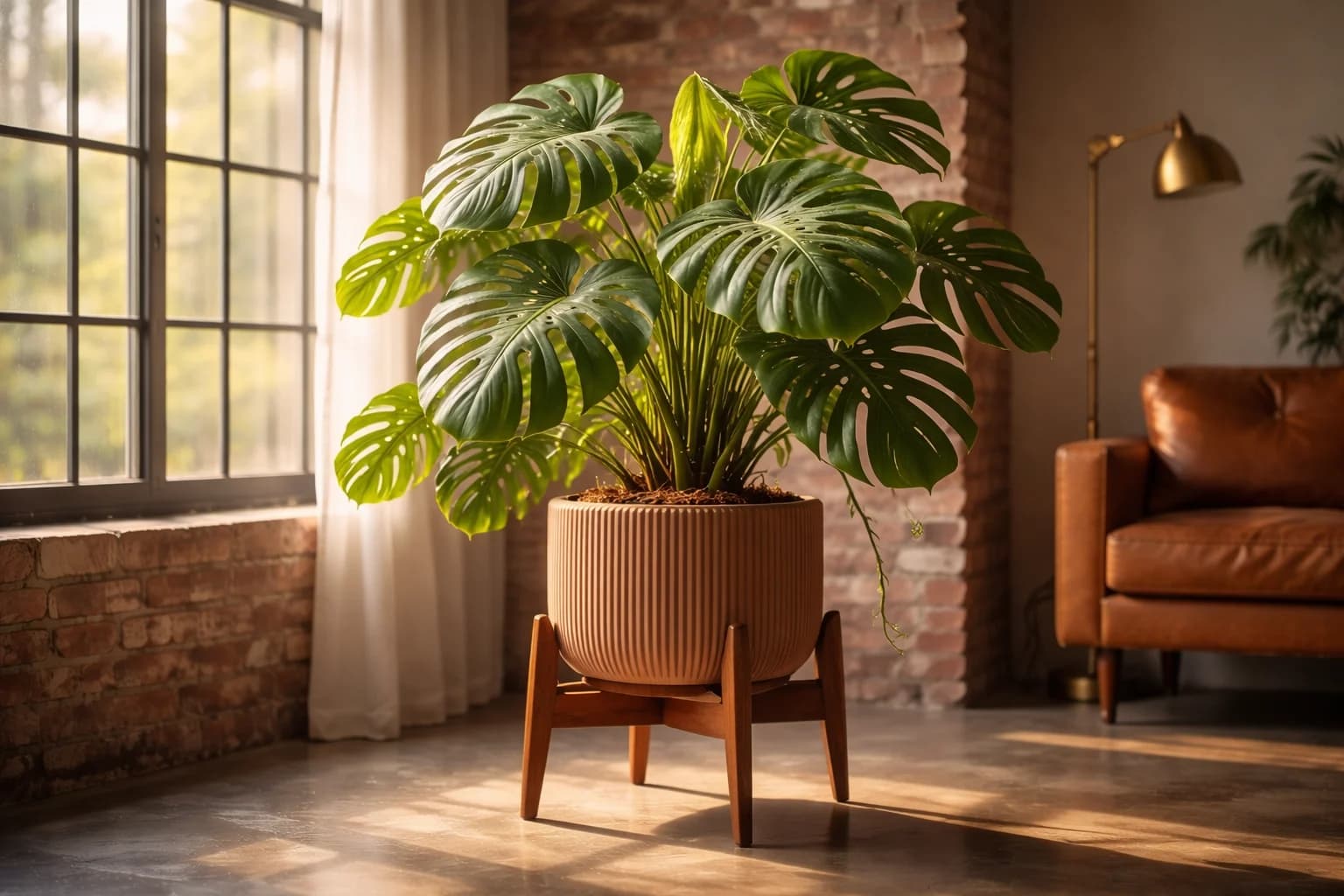
MonsteraCare Guide
Monstera deliciosa
Also known as: Swiss Cheese Plant, Split-Leaf Philodendron, Fruit Salad Plant
Quick Care Reference
Water
Every 7-14 days
Let top 2 inches dry between waterings
Light
Bright indirect
No direct sun to prevent leaf burn
Humidity
50-60%+
Benefits from higher humidity
Temperature
65-85°F
Avoid cold drafts below 55°F
Soil
Well-draining
Chunky aroid mix with perlite and bark
The monstera is an Instagram icon for good reason — its dramatic, fenestrated (hole-filled) leaves bring instant jungle vibes to any space. Native to Central American rainforests, monsteras are climbers that can grow impressively large with proper support. Young plants have solid leaves; the iconic splits and holes develop as the plant matures, making each new leaf an exciting reveal. While they look exotic, monsteras are surprisingly easy to care for once you understand their needs.
Watering Guide
Monsteras like consistently moist (not wet) soil. Water when the top 2 inches feel dry. They're more forgiving of underwatering than overwatering, so err on the side of letting them dry out a bit. A moisture meter can help take the guesswork out of watering.
Seasonal Adjustments
Spring
Active growth begins. Water every 7-10 days as needed.
Summer
Peak growing season. May need water weekly. Watch for drooping.
Fall
Growth slows. Reduce to every 10-14 days.
Winter
Semi-dormant. Water every 2-3 weeks. Overwatering risk increases.
Signs of Overwatering
- Yellow leaves, especially lower ones
- Brown or black spots with yellow halos
- Mushy stems near soil
- Fungus gnats around plant
- Leaves drooping despite moist soil
Signs of Underwatering
- Crispy brown leaf edges
- Leaves curling inward
- Drooping leaves that perk up after watering
- Slow leaf unfurling
- Soil pulling away from pot edges
Light Requirements
Monsteras thrive in bright, indirect light. In the wild, they grow under the forest canopy, so they're adapted to filtered light. Direct sun can burn their leaves, but too little light means slow growth and fewer fenestrations.
Ideal Conditions
Bright, indirect light from an east or north window. Can tolerate a few hours of morning direct sun.
Low Light Tolerance
Moderate. Will survive but grow slowly and produce smaller leaves without fenestration.
Common Problems
Spot something wrong? Find your symptoms below to diagnose and fix the issue.
Toxicity Warning
Contains calcium oxalate crystals. Causes oral irritation, intense burning, drooling, and difficulty swallowing if ingested. Keep away from pets and small children.
Monstera Care FAQ
How do I get my monstera to develop holes?
Fenestration (the holes) develop with plant maturity and adequate light. Provide bright indirect light, give it support to climb (like a moss pole), and be patient. Young plants produce solid leaves; fenestration typically begins when the plant is 2-3 years old.
How often should I water my monstera?
Every 1-2 weeks, depending on conditions. Let the top 2 inches of soil dry before watering. In winter, water less frequently. The best approach is to check the soil rather than following a strict schedule.
Why are my monstera leaves turning yellow?
Usually overwatering. Let the soil dry out more between waterings. Check that your pot has drainage. Some yellowing of old lower leaves is normal — the plant naturally sheds them to put energy into new growth.
Is monstera toxic to pets?
Yes, monstera contains calcium oxalate crystals and is toxic to cats and dogs. Ingestion causes oral irritation, drooling, and difficulty swallowing. Keep out of reach of pets.
Should I give my monstera a moss pole?
Yes! Monsteras are natural climbers. A moss pole or trellis helps them grow larger, develop bigger leaves with more fenestration, and prevents them from sprawling. Install when the plant is young.
Can I propagate my monstera?
Absolutely. Cut below a node (look for the small brown bumps on the stem, ideally one with an aerial root), place in water until roots develop (2-4 weeks), then transfer to soil. It's one of the easier plants to propagate.
Track your Monstera
Smart reminders, health tracking, and household coordination — all free.
No credit card required