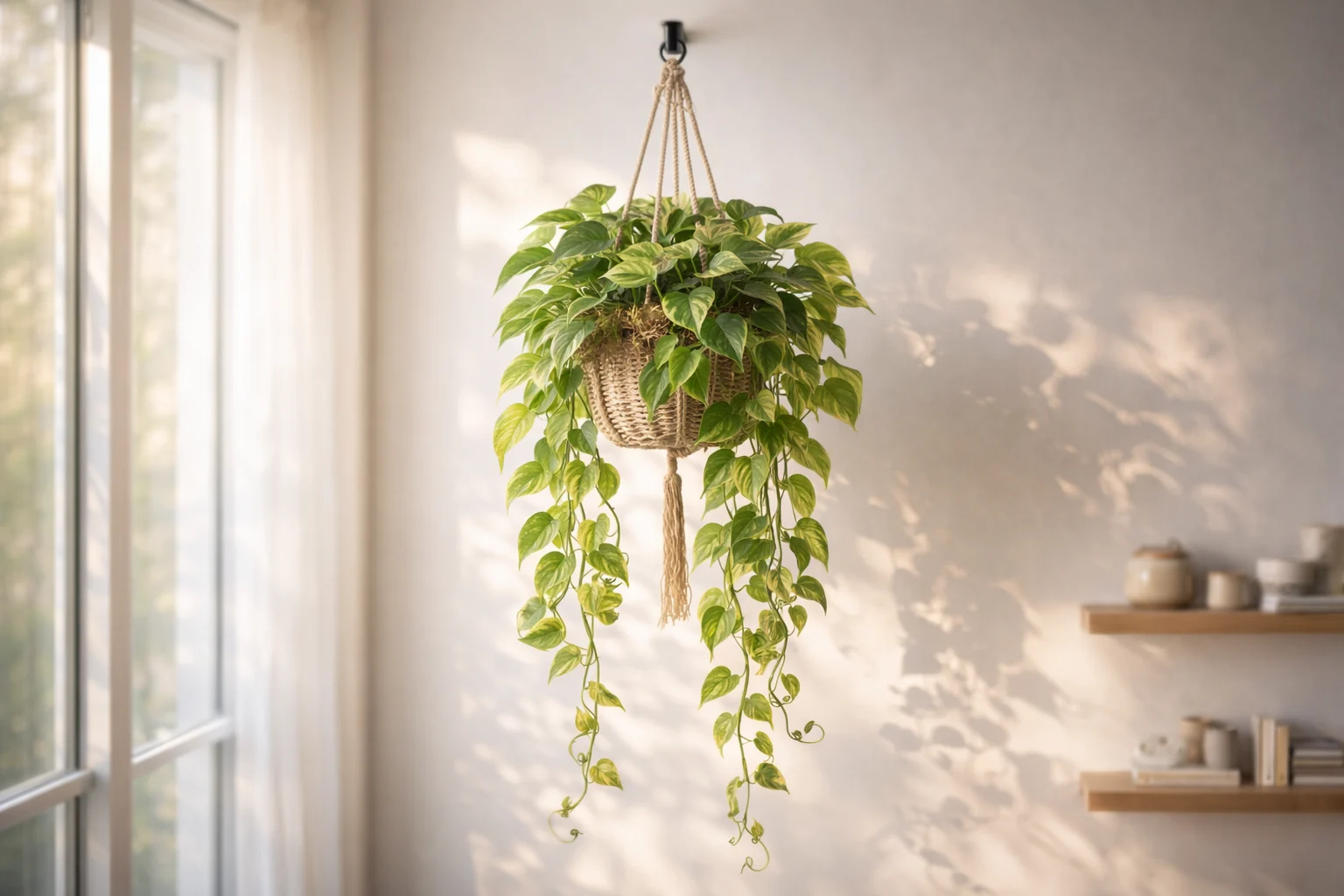
PothosCare Guide
Epipremnum aureum
Also known as: Devil's Ivy, Golden Pothos, Money Plant
Quick Care Reference
Water
Every 7-10 days
Let top 1-2 inches dry between waterings
Light
Bright indirect
Tolerates low light but grows slower
Humidity
Average (40-60%)
Adapts to most home humidity levels
Temperature
65-85°F
Keep away from cold drafts
Soil
Well-draining
Standard potting mix with perlite
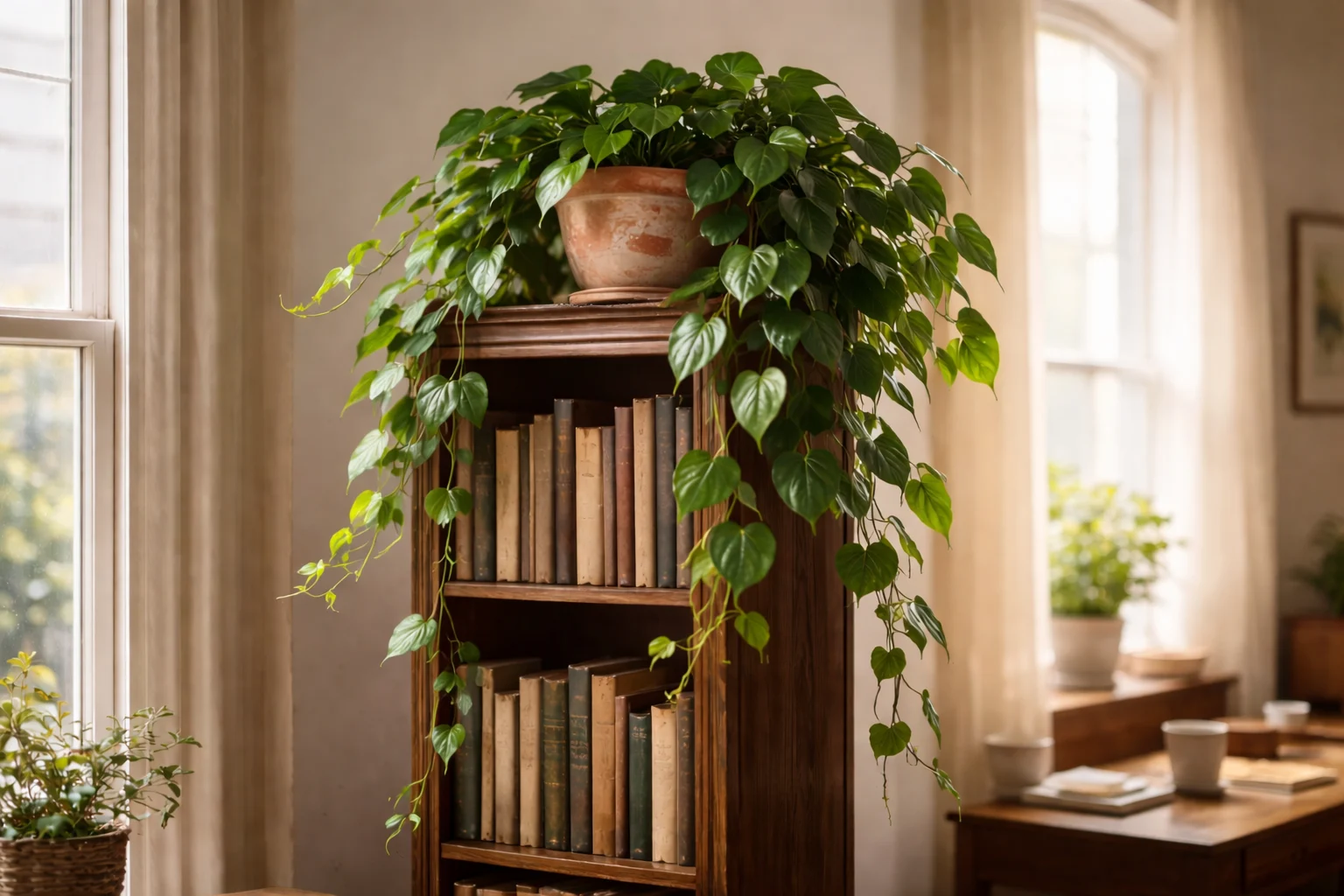
Pothos is one of the most popular and forgiving houseplants, making it perfect for beginners. Its heart-shaped leaves trail beautifully from hanging baskets or climb up moss poles, and it tolerates a wide range of conditions. Known as Devil's Ivy because it's nearly impossible to kill, pothos will reward you with fast growth and easy propagation. Available in numerous varieties — from the classic golden pothos to marble queen and neon — there's a pothos for every space and style.
Watering Guide
Pothos prefers to dry out slightly between waterings. Stick your finger into the soil — if the top inch or two feels dry, it's time to water. When you do water, water thoroughly until it drains from the bottom, then discard any excess. The most common mistake is overwatering, which leads to root rot.
Seasonal Adjustments
Spring
Resume regular watering as growth increases. Every 7-10 days.
Summer
May need water more frequently. Check every 5-7 days.
Fall
Reduce frequency as growth slows. Every 10-14 days.
Winter
Water sparingly during dormancy. Every 14-21 days. Soil dries slower.
Signs of Overwatering
- Yellowing leaves, especially lower ones
- Soft, mushy stems near the soil
- Black spots on leaves
- Wilting despite wet soil
- Fungus gnats around the plant
Signs of Underwatering
- Drooping, wilted leaves
- Brown, crispy leaf edges
- Slow or stunted growth
- Leaves curling inward
- Dry soil pulling away from pot edges
Light Requirements
Pothos thrives in bright, indirect light but is remarkably adaptable. It will grow in low light conditions, though more slowly and with less vibrant variegation. Avoid direct sunlight, which can scorch the leaves.
Ideal Conditions
Bright, indirect light near an east or north-facing window. Dappled light works well.
Low Light Tolerance
Excellent. One of the best low-light houseplants, though variegation may fade.
Common Problems
Spot something wrong? Find your symptoms below to diagnose and fix the issue.
Toxicity Warning
Contains calcium oxalate crystals. If ingested, causes oral irritation, excessive drooling, and vomiting. Keep out of reach of pets and children. Contact a vet or poison control if significant amounts are consumed.
Pothos Care FAQ
How often should I water my pothos?
Water your pothos every 7-10 days, but always check the soil first. Let the top 1-2 inches dry out between waterings. In winter, you may only need to water every 2-3 weeks. The key is consistency — pothos prefers slightly dry to soggy.
Can pothos grow in low light?
Yes! Pothos is one of the best low-light houseplants. It will survive in low light but grows slower, and variegated varieties may lose some of their patterning. For the healthiest plant, provide bright, indirect light.
Why are my pothos leaves turning yellow?
Yellow leaves usually indicate overwatering. Let the soil dry out more between waterings and ensure your pot has drainage. Some yellowing of older, lower leaves is normal — the plant naturally sheds them.
Is pothos toxic to cats and dogs?
Yes, pothos is mildly toxic to pets if ingested. It contains calcium oxalate crystals that cause oral irritation, drooling, and vomiting. Keep it out of reach of curious pets, or consider a pet-safe alternative like spider plants.
How do I make my pothos grow faster?
Provide bright, indirect light, maintain consistent watering, and feed with a balanced liquid fertilizer monthly during spring and summer. Warm temperatures (65-85°F) also promote growth. Pruning leggy stems encourages bushier growth.
Can I propagate pothos in water?
Absolutely! Pothos is one of the easiest plants to propagate. Cut below a node (the small bump where leaves attach), place in water, and wait 2-4 weeks for roots to develop. Once roots are 2-3 inches long, transfer to soil.

Track your Pothos
Smart reminders, health tracking, and household coordination — all free.
No credit card required