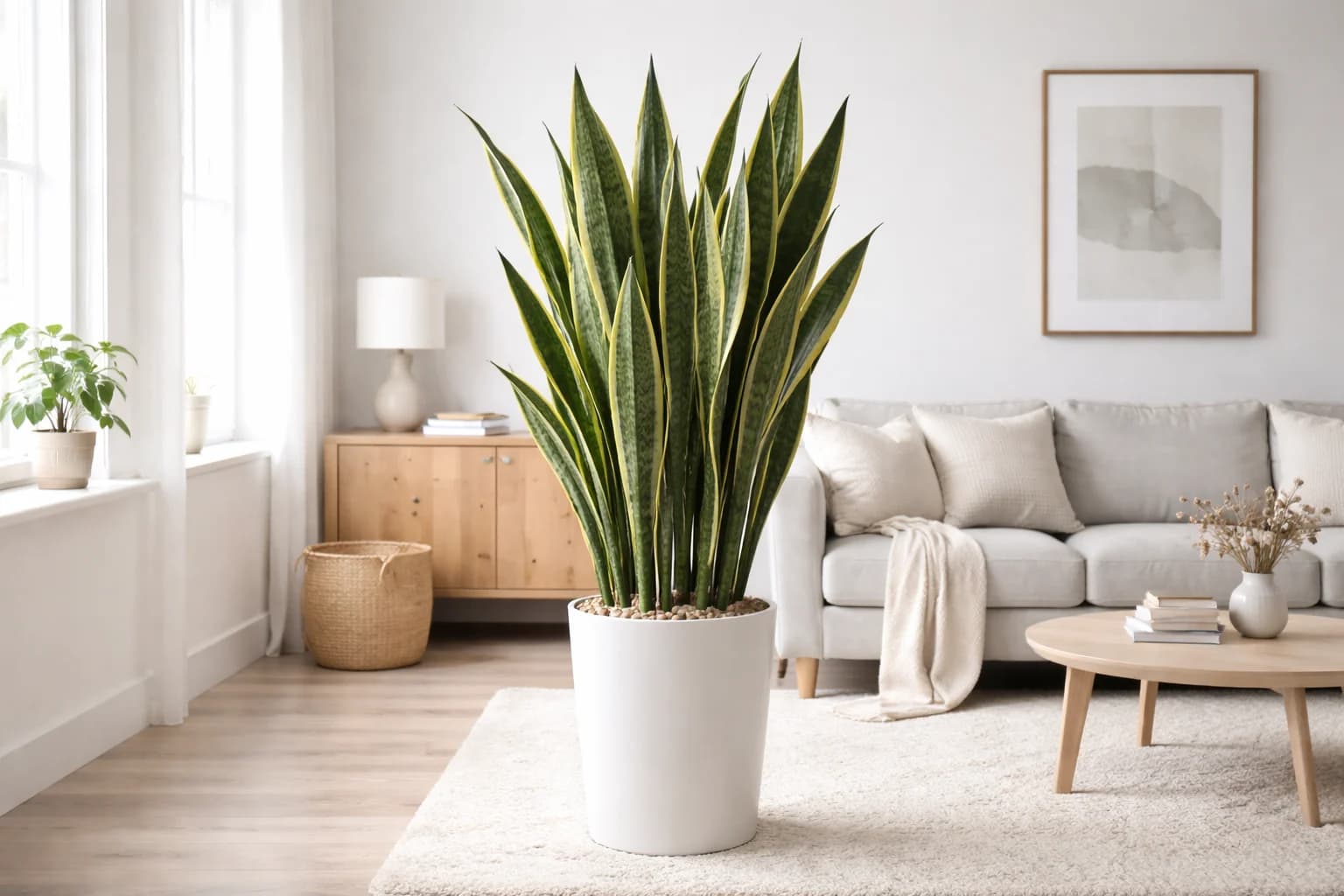
Snake PlantCare Guide
Dracaena trifasciata
Also known as: Mother-in-Law's Tongue, Sansevieria, Saint George's Sword
Quick Care Reference
Water
Every 2-6 weeks
Allow soil to dry completely between waterings
Light
Any light level
Thrives in low to bright indirect light
Humidity
Any (30-70%)
Highly adaptable to typical home humidity
Temperature
60-85°F
Avoid temperatures below 50°F
Soil
Fast-draining
Cactus/succulent mix or add extra perlite
The snake plant is the ultimate beginner-friendly houseplant, thriving on neglect and tolerating conditions that would kill most plants. Its architectural, sword-like leaves add a modern touch to any space, and it's one of the best plants for air purification. Snake plants store water in their thick leaves, making them drought-tolerant and perfect for forgetful waterers. They're also excellent for bedrooms, releasing oxygen at night unlike most plants.
Watering Guide
Snake plants are succulents — they store water in their leaves and prefer to dry out completely between waterings. Overwatering is the #1 cause of snake plant death. When in doubt, wait longer. Stick your finger deep into the soil; only water when it's completely dry, even an inch or two down.
Seasonal Adjustments
Spring
Resume regular watering. Every 2-3 weeks as growth increases.
Summer
Most active growth. Water every 2-3 weeks when soil is dry.
Fall
Reduce watering as growth slows. Every 3-4 weeks.
Winter
Water sparingly — once a month or less. Growth is dormant. Overwatering risk is highest now.
Signs of Overwatering
- Soft, mushy leaves
- Leaves falling over or collapsing
- Yellow leaves, especially at base
- Foul smell from soil (root rot)
- Brown, mushy base of plant
Signs of Underwatering
- Wrinkled, shriveled leaves
- Leaves curling inward
- Brown, dry leaf tips
- Extremely slow growth (though naturally slow)
Light Requirements
Snake plants are incredibly adaptable to different light conditions. They'll survive in low light corners, though they grow faster and maintain better color in brighter light. They can even handle some direct sun, especially morning light.
Ideal Conditions
Bright, indirect light produces the fastest growth and best coloration. A few feet from an east or west window is perfect.
Low Light Tolerance
Excellent — one of the best. Can survive in near darkness, though growth will be very slow.
Common Problems
Spot something wrong? Find your symptoms below to diagnose and fix the issue.
Toxicity Warning
Contains saponins. Mildly toxic if ingested — causes nausea, vomiting, and diarrhea in pets and humans. Generally not life-threatening but keep away from curious pets and children.
Snake Plant Care FAQ
How often should I water my snake plant?
Every 2-6 weeks, depending on season and conditions. The key rule: let soil dry out completely between waterings. In winter, you may only water once a month. Snake plants are drought-tolerant — when in doubt, don't water.
Can snake plants survive in a dark room?
Yes, snake plants are exceptional low-light plants. They can survive in dim corners, though they'll grow very slowly. For faster growth and better color, provide bright indirect light.
Why is my snake plant falling over?
Usually overwatering causing root rot. Feel the base of the leaves — if they're mushy, root rot is likely. Remove from pot, trim damaged roots, and repot in dry cactus mix. Let it recover in bright indirect light.
Is snake plant toxic to pets?
Yes, snake plants are mildly toxic to cats and dogs. They contain saponins that can cause nausea, vomiting, and diarrhea if ingested. Keep them out of reach of pets.
How do I propagate a snake plant?
Two easy methods: 1) Divide pups from the mother plant when repotting. 2) Cut a leaf into 3-4 inch sections, let them callus for a day, then plant in soil. Leaf cuttings take 2-3 months to root, but they work.
Should I mist my snake plant?
No. Snake plants don't need or want extra humidity. Misting can actually encourage fungal issues. They're adapted to dry conditions and do perfectly fine with normal household humidity.

Track your Snake Plant
Smart reminders, health tracking, and household coordination — all free.
No credit card required