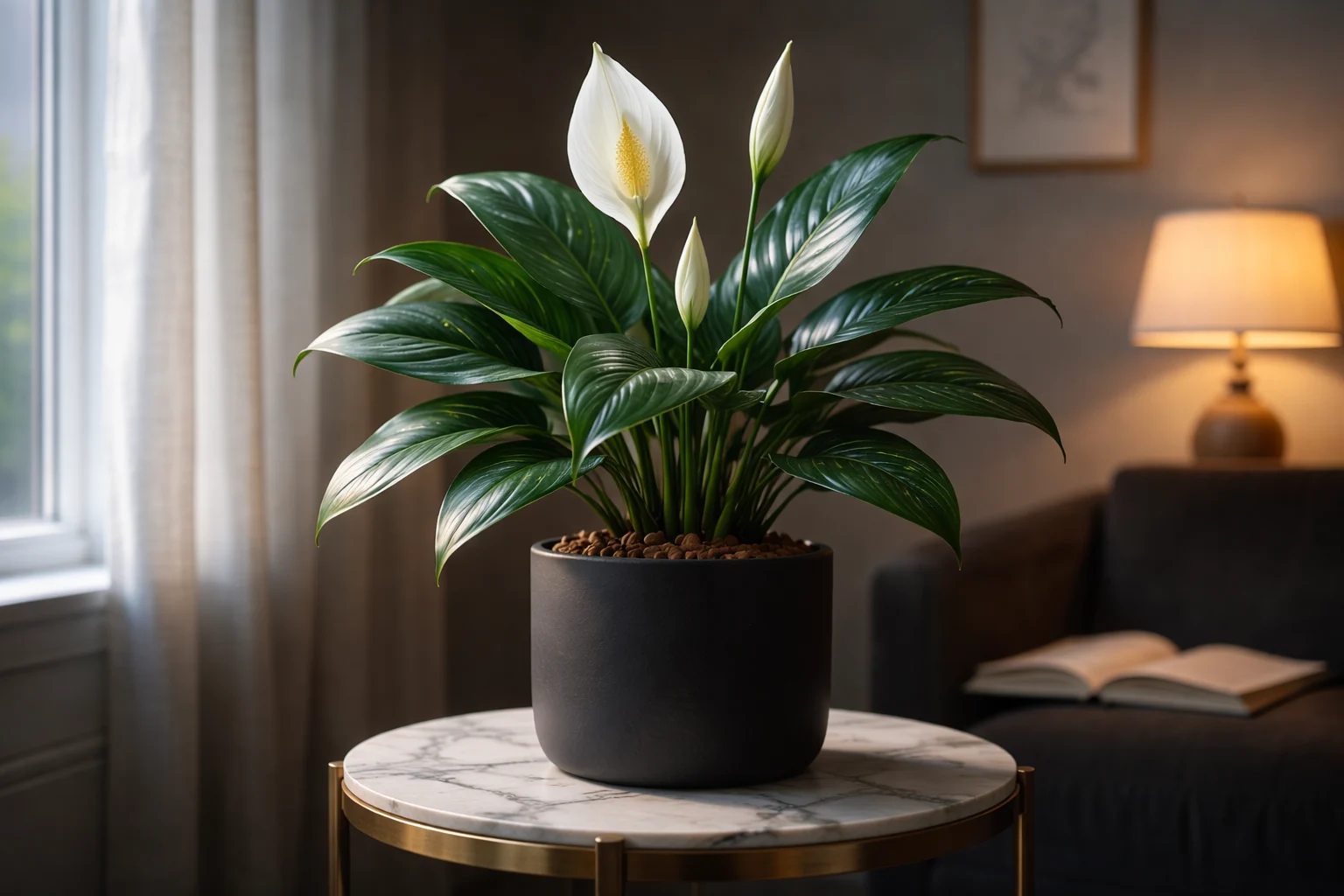
Peace LilyCare Guide
Spathiphyllum wallisii
Also known as: Spath, White Sails, Spathe Flower
Quick Care Reference
Water
Every 7-10 days
When top inch is dry, or leaves start drooping
Light
Low to bright indirect
One of the best low-light flowering plants
Humidity
50%+
Appreciates higher humidity
Temperature
65-80°F
Keep away from cold drafts
Soil
Rich, well-draining
Standard potting mix works well
The peace lily is a favorite for its elegant white blooms and air-purifying abilities. Unlike most flowering houseplants, peace lilies thrive in low light, making them perfect for offices and north-facing rooms. They're also excellent communicators — when they need water, their leaves droop dramatically, perking up within hours of a drink. NASA studies found peace lilies among the best plants for removing indoor air pollutants. With proper care, they'll reward you with frequent blooms.
Watering Guide
Peace lilies like consistently moist soil and will tell you when they're thirsty — their leaves droop noticeably. Water thoroughly when the top inch of soil is dry, or when you see the leaves starting to wilt. They're forgiving of occasional drought but don't like sitting in water.
Seasonal Adjustments
Spring
Active growth and potential blooming. Water every 7-10 days.
Summer
May need more frequent watering. Check every 5-7 days. Watch for drooping.
Fall
Growth slows. Water every 10-14 days.
Winter
Reduced water needs. Every 2 weeks or when leaves droop slightly.
Signs of Overwatering
- Yellow leaves, especially lower ones
- Brown, mushy roots
- Leaves yellow with brown spots
- Fungus gnats
- Musty soil smell
Signs of Underwatering
- Dramatic drooping of all leaves
- Brown, crispy leaf edges
- Slow growth
- No new blooms
Light Requirements
Peace lilies are one of the few flowering plants that tolerate low light. They'll survive in dim conditions but bloom more in brighter light. Avoid direct sunlight, which scorches their leaves.
Ideal Conditions
Bright, indirect light produces the most blooms. East or north-facing windows work well.
Low Light Tolerance
Excellent. One of the best flowering plants for low light, though it may not bloom as often.
Common Problems
Spot something wrong? Find your symptoms below to diagnose and fix the issue.
Toxicity Warning
Contains calcium oxalate crystals. Causes oral irritation, drooling, and difficulty swallowing if ingested. Not typically life-threatening but can be uncomfortable. Keep away from pets and children.
Peace Lily Care FAQ
How do I get my peace lily to bloom?
Provide bright, indirect light — this is the most important factor. Fertilize with a balanced fertilizer monthly during spring and summer. Ensure the plant isn't stressed from over/underwatering. Some patience is needed; blooms are most common in spring and summer.
Why does my peace lily droop so dramatically?
Peace lilies are drama queens! They droop noticeably when thirsty but recover quickly after watering. This is actually helpful — it's a clear signal that it's time to water. If it droops despite moist soil, check for root rot.
Why are my peace lily's leaf tips turning brown?
Usually low humidity or tap water sensitivity. Peace lilies are sensitive to fluoride and chlorine in tap water. Try using filtered or distilled water, and increase humidity with a humidifier or pebble tray.
Is peace lily toxic to cats?
Yes, peace lilies are mildly toxic to cats and dogs. They contain calcium oxalate crystals that cause oral irritation, drooling, and vomiting. Keep them out of reach of pets.
Can peace lilies purify air?
Yes! NASA research found peace lilies effective at removing several indoor pollutants including formaldehyde, benzene, and ammonia. While a few plants won't transform your air quality, they do contribute to a healthier indoor environment.
How often should I repot my peace lily?
Every 1-2 years, or when roots start circling the pot or growing from drainage holes. Spring is the best time. Go up only one pot size. Peace lilies actually bloom better when slightly root-bound.
Track your Peace Lily
Smart reminders, health tracking, and household coordination — all free.
No credit card required